"Rich and carefree? No, being a pilot is a wolf's life"
We spoke with Roberto García San Miguel: from its breathtaking views, dog-pilots and rotocrafts of all types he told us what it really means being a helicopter pilot
Mostly overpaid, carefree and with a dream job. Often the people imagination frames helicopter pilots with these adjectives. But it is not always true: in a rapidly-changing world as the helicopter industry, being a pilot is becoming more and more a vocation that brings with it years and years of hard work, sacrifices and more.
That's why we chose Roberto García San Miguel, a young HEMS co-pilot committed in Spain with one of the best known and largest provider in the world.
Roberto works aboard an AgustaWestland AW109 and on his Instagram profile (@lobopiloto) he parades every day helicopters, breathtaking views and his inseparable wolf dog Lloba.
These passions seem like many others, some of the frames of the life of every professional pilot. But they are also snapshots that hide many truths about the real life of the helicopter pilots.
Here is his story (and his pictures).
Roberto, when did you started taking pictures of helicopters?
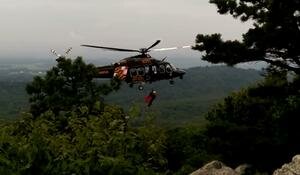
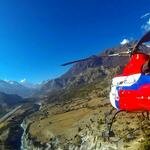
When I started my course of helicopter pilot, I wanted to know all aircraft types and all I wanted to photograph them. My goal was to make a list to remember them all easily. So I started for practical reasons. And then I have not stopped. Now I take a picture every time I'm at work and that old helicopter list has become an amateur book of helicopters at work: from firefighting to rescue and HEMS.
What is your favorite helo?
It's hard to pick just one, but I would say the Eurocopter (now Airbus Helicopters, ed) AS350 Ecureil. I choose it mainly for its versatility and for its lightweight. The lightness, however, does not preclude the possibility of having excellent load carrying capacity and still be able to fly at great speed. Ecureil aside, I think that all italian made helicopters are great machines, including the AW109 on which I work today: even at a glance they seem more aerodynamic and, in one word, they simply look beautiful.
In the photogallery: @lobopiloto best shots
How it started and what does i means “lobopiloto”, the name you use on Instagram?
When I entered the aviation's world I always took with me my wolf dog at the flight school. She's a female named Lloba. My colleagues us to make jokes about that, they said that she would become the best pilot of us because she paid more attention than the rest of the class.
Actually Lloba loves to fly and she also has her own flight helmet: she observes down really carefully, like a professional working on a mission.
Or, better, as if she's looking for a stick to play.
What kind of helicopter do you like the most?
As a child I always wanted to be a helicopter pilot of the mountain rescue. Nowadays I'm a pilot operations, something that I love and reminds me the dream of childhood.
HEMS is a very rewarding job, it is gratifyng to know that I can help people when they need it, in high-risk operations and highly specialized medical care. In general, like all pilots, I love any job where you fly at low altitude, dodging the trees and flying through the riverbeds.
Do you think social media will help spreading the importance of aerial work?
I think the aerial work is not fully known yet. It is known by the population the use of rescue helicopters, fire or military, because it´s possible to see them in the everyday life, flying over the houses or in the television news.
But the helicopter today is used for many other types of jobs, such as high voltage cables maintenance or supporting scientific research, and helping in the carriage of goods or personnel necessary in the right places.
Social medias spread the doors of communication to the wider public of the world and through them you don't have to be a specialist to get to see images or video or getting information about something often very far away from you, just as the aerial work.
What are the best and which the worst parts of your job?
Without a doubt the best part of the HEMS work are the faces and expressions of who is being rescued and the relief on the faces of the patient's relatives. But I'd be lying if I said that the best part is just being in the air and enjoying the scenery which I have the privilege to observe every day.
Among the hardest parts, at least for those who work in HEMS, it is being asked to intervene in missions where people are involved in serious condition, and sometimes they are very young. It is often scary understanding how every effort, even the most rapid, precise and technology supported, can be vain. These are situations that could recorded in mind for a long time. You have to be very strong and to treat all patients equally: in the end we are human beings and it is normal to feel weak in these types of situations.
People usually think that pilots are mostly rich people and do a dream job.
The general idea of a pilot is that he has a well positioned person in terms of salary and standard of living, and that´s also what movies often show. However, it could be true a few years ago, nowadays that´s not the reality: salaries has dropped.
It is also complicated to spend many days away from home during the month and the year. Many times you feel lonely when you are many kilometers away from home or even at relatively few, but with an obligation to be at a certain distance from the base. This also makes your life a bit messy, because you never know how the month of work will be: if you will have time to spend time with your people, to plan monthly activities, either sign up to the gym or take a few days getaway with your family, even get to ask yourself if you can have a dog.
Se vuoi ricevere gli aggiornamenti di Helipress iscriviti alla nostra newsletter