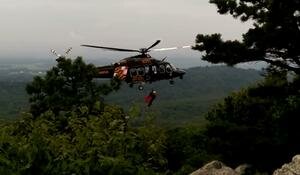
"The helicopter? The best office with the best view"
He speaks like a veteran, he loves to take pictures and he served during one of the most devastating natural disasters of the last 50 years: the story (and the pictures) of Ranjan Limbu
“Namaste from Nepal”. It's how Ranjan Limbu, a helicopter pilot in the country of the world's highest peaks, says hello. He's just 25 and he already sits in the right seat of a AS350B3 operated by Fishtail Air in the Himalayan mountains. He speaks like a veteran, he loves to take pictures of helicopters and he served during one of the most devastating natural disasters of the last 50 years: the earthquake in Nepal of April 25, 2015.
He told us how his passion for photography was born and how difficult it is to work in a helicopter in Nepal. Ranjan also offered us his unique perspective on the days that forever changed his country.
Ranjan, let's start from you. Who are you and what do you do for a living?
My name is Ranjan Limbu, I'm 25, I'm a helicopter pilot and I work with Fishtail Air Pvt ltd since 2010.
How did you became a helicopter pilot?
I am from Charali, in the eastern part of Nepal. There I spent most of my childhood. We had a army base nearby and I used to run a mile just to have a glance of Army helicopters. And i think its in my blood too: I have always loved aviation since I have been a kid. It's the best office with the best view.
When did you start your taking pictures of helos?
Since i start working with helicopter. Being a helicopter pilot you get the chance to visit and see many beautiful places that many people dreams of. I just can't help myself rather to grab my camera and take pictures.
In the photogallery: Ranjan Limbu's best pictures from Instagram
What is your favorite helicopter?
AS350 series, because she's making my dream a reality.
You work for Fishtail Air in Nepal: have you worked during the earthquake in last april?
Yes, I flew a lot for the rescue and relief flights after the earthquake.
Can you tell us your story and your opinion about that sad event?
On April 25th , it occurred at 11:56 Local time. I was in Lukla with Capt Reto (CEO of Heli Linth, Mollis Switzerland). Mobiles and Tv were temporary disrupted by earthquakes. News started coming about death tolls and about avalanches in the Everest Base camp. Due to bad weather we were forced to be on ground that day but on 26th, on the very first light of the day, we started rescuing the injured first from the Everest base camp. Capt Maurizio Folini also joined us in the Everest base camp rescue some days later. After two weeks, we all returned back to and started working around Kathmandu area.
Helicopters made the differences during the emergency.
Due to difficult terrains and villages with no road connection, people and government we forced to rely on helicopter for rescue and to transport food, medicine and temporary shelter materials. We nepalese were overwhelmed by the help we received from all around the world. That sad event helped all the nepalese to unite and work as a team to overcome the grief.
What's the situation now in Nepal after 6 months?
Now the situation is under control. People have already returned to their daily routine. Every private and government offices and school are running smoothly as before.
Have you worked with Mr Maurizio Folini and Mr Simone Moro?
With Simone I didn’t get a chance to fly but I flew a lot with Maurizio .He is a very skilled pilot, I got a chance to learn many skills with him.
Does Nepal need a proper HEMS network?
At present conditions, we are using our machine for sight seeing, aerial work, taxi flight, rescue flight and whatever it comes. For a emergency rescue mission, we have two hospital with rooftop helipad inside Kathmandu valley. Although we accommodate doctor, oxygen and stretcher for rescue mission, we have no outfitted aircraft with all the medical equipment vital to monitoring and treating injured or ill patients like REGA helicopter. It would be nice to have a dedicated air ambulance in our country.
What are the most difficult parts of working as a helicopter pilot in Nepal?
We have difficult terrains, quick changes in weather and ultra high altitudes. They definitely makes helicopter pilot a difficult job in Nepal.
What are the best parts of working as a pilot in Nepal?
Nepal is one of the richest countries in the world in terms of bio-diversity due to its unique geographical position and altitude variation. The elevation of the country ranges from 60 meters above sea level to the highest point on earth, Mt. Everest at 8,848 metres. This wild variation fosters an incredible variety of ecosystems, the greatest mountain range on earth, thick tropical jungles teeming with a wealth of wildlife, thundering rivers, forested hills and frozen valleys makes flying in Nepal soo memorable and beautiful.
You're 25 now: what are your dreams as a helicopter pilot?
I just started my career and I have a very long way to go. My life goals are dedicating my entire life in helicopter industry and serving my country. And I also would like to continue my rotographer career alongside.
What kind of operations do like the most?
I love every work related with helicopter. May it be helping on ground, cleaning, carrying sling loads, taxi flights. But i love doing rescue flights: I get a huge life satisfaction rescuing people.
What camera do you use?
I sometime use GoPro but most of my picture are captured by Iphone5s and a Sony 5100.
Do you think that the social media will help spreading the importance of aerial work?
I think so. Besides sharing pictures in social network and being able to know pilots from all around the world, I get a huge motivation from their works. Helicopter pilot forums, aviation blogs, and training pages always inspires and motivate me to get better and learn many things from them.